
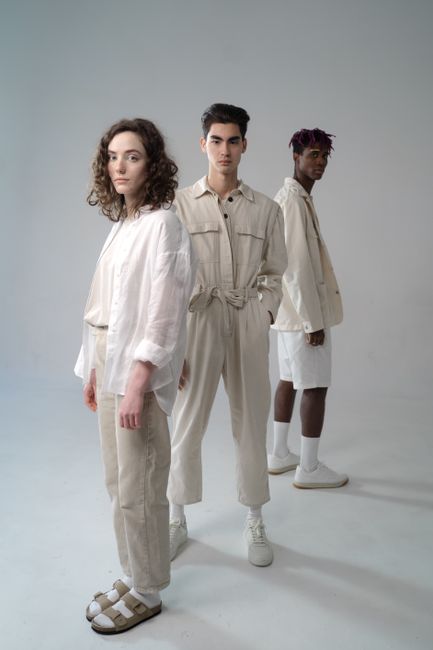
From your sofa you can browse a whole rail of garments, but the sizing decisions land with you. Spending a short while with a soft tape measure can break the cycle of ordering, trying and sending back. You are not chasing an ideal number; you are learning your shape so size charts make sense. That knowledge makes online shopping much less of a gamble. This guide also touches on jackets and how it fits into the bigger picture.
Start with suitable tools and posture
A soft tape designed to wrap around the body is the right choice; a rigid metal toolbox tape is not. An old tape may produce inaccurate figures, so verify that yours has not stretched or frayed. Stand in front of a mirror so you can see whether the tape is level and flat. Instead of bulky jumpers or baggy trousers, wear underwear or leggings with a fitted top.
Let your arms rest at your sides and bring your feet together, standing in a relaxed way. Sidestep holding your stomach in and breathe as normal; the tape should not be pulled tight enough to dig in. If possible, get another person to assist with inside leg, shoulder and back measurements, since turning to read the tape yourself may alter the figure. Record every measurement plainly in inches or centimetres, yet stay with one unit all the way through.
Key measurements to take
Before looking at other details, start with the small group of body measurements on which most size charts are based. Measure each point two or three times, then rely on the consistent reading instead of your first try. Rather than rounding away a figure that lies between marks, write down the half measurement.
- Waist: with the tape around the thinnest part of your middle, typically above the navel, take the reading.
- Sleeve length: with the arm gently bent, measure from the shoulder point down to the wrist.
- Shoulder width: across your back, run the tape from one shoulder edge to the other.
- Inside leg: either use trousers that fit you well or measure between the crotch seam and the ankle bone.
- Hips: measure the fullest area of your hips and bottom while standing with feet close.
- Bust or chest: measure at the fullest area, making sure the tape stays level at the back.
Many trousers, jackets, dresses and tops can be sized using these six figures. You may wish to add a length measurement for skirts and dresses, running from natural waist to where you like the hem. This helps particularly if you are petite or tall, or care precisely where a hem lands. Many readers also find custom jackets shop helpful here.
Measuring tricky areas accurately
Chest and bust
Keep the tape level with the floor at the back as you encircle the fullest part of your bust. Avoid allowing the tape to sink at the back or climb over your shoulder blades. When you wear a bra, take measurements in the style you would usually pair with that item. Use that same height for the chest, but do not tighten the tape across your shoulder blades.
The waist and hip area
Trousers do not always rest at your natural waist, so seek the soft hollow between hip bones and ribs. Take the reading at that spot with no stomach sucking, and ensure the tape stays level throughout. Stand with feet close for the hip measurement, taking the widest part of your lower body. Look in the mirror and confirm that the back of the tape is not twisted.
Sleeve, rise and inseam
Height alone is frequently less helpful for trousers than the inside leg measurement. Ask a helper to measure from your crotch to ankle bone, or use the crotch seam to hem of trousers that fit well. Rise runs from the crotch seam up to the waistband top, and it determines how trousers sit on you. With your arm relaxed and a little bent, measure sleeves from shoulder point to wrist.
Check measurements twice with help
With someone assisting, tricky measurements are much more trustworthy, above all across the back and around the hips. Ask your helper to read the number level with their eyes and to keep the tape even. When measuring another person, reverse roles next and compare the notes you each made. Rather than selecting your favourite, make a third measurement when two readings differ greatly.
Prior to writing each measurement down, confirm it against your body using a mirror. It should not slope, and it should rest flat without digging in or leaving gaps. Though little inaccuracies happen, a tape that has moved around your back can push you two sizes off course. Speed is less valuable than accuracy at this stage.
Use your figures for a confident fit
Rather than assuming one letter size works everywhere, check the size chart for each item. Pay attention to fit notes as you compare the chart with your bust, waist and hips. Although a loose jumper and a structured jacket may share a size label, the amount of ease they need is very different. Should you sit between sizes, let the desired look and the material guide you.
Compare any listed garment measurements with a comparable item already in your wardrobe that you like. Measure across the waist, chest or hips of the flat garment, then double that figure when appropriate. Such a comparison often says more than measuring your body alone, since it shows the space the cut provides. For a fitted piece, rely chiefly on body measurements; for a loose piece, the garment measurement better indicates the drape.
The material counts as well. When a stretchy jersey top and a stiff cotton shirt share the same measurements, they will still behave unlike each other. Decide if you prefer a close fit, a neat fit or space for layering, then make your choice. When in doubt, look at the returns policy before you buy so you understand what you can do.
Keep a personal measurement note
Rather than starting over each time, note measurements in a single place and update them whenever your body changes. Note your fitting preferences too, such as the sleeve length you like or where waistbands should sit. Measurements from a few clothes that fit you well should be included too. Then, when buying later, you can set items against trusted clothes you own.
Make the record clear and straightforward, and mark the unit plainly. When buying for various seasons, include a note about layering room, since a winter jumper needs extra space. Online shopping becomes faster and much less irritating with a handful of truthful notes.
Last checks before ordering
Before ordering, go back over the size chart and your own notes. Check fabric, intended fit and returns policy, and decide if a second size is worth trying at home. Measuring gives you better information, not a perfect body, and a simple routine brings greater confidence and fewer surprises. Use these points as a starting place for anything related to jackets.


Zhon Andarson
Coding is used in almost all aspects of life and work now, be it directly or indirectly. It’s not just for companies in the tech sector. “An increasing number of businesses rely on computer code,
Andro Smith Doe
Coding is used in almost all aspects of life and work now, be it directly or indirectly. It’s not just for companies in the tech sector. “An increasing number of businesses rely on computer code,